As an Amazon Associate, we earn from qualifying purchases. Some links on this site are affiliate links at no extra cost to you. Our recommendations are based on thorough research and editorial judgment.

How To Manage Smoke From Stoves?

Managing smoke from stoves is essential for cleaner air and better cooking. First, we should select the right stove and fuel—canister stoves are great for quick trips, while liquid fuel stoves work well for longer adventures. Ensuring proper combustion is key; let’s maximize airflow and use seasoned wood. Regularly maintaining our stoves and chimneys will keep creosote at bay. Plus, by lighting fires from the top, we can reduce smoke. Stick around, and we’ll explore more tips and tricks!
Key Takeaways
- Ensure proper airflow by opening all vents before starting the stove for optimal combustion and smoke reduction.
- Use seasoned wood with around 20% moisture content to minimize smoke production during burning.
- Implement the top-down lighting method to enhance airflow, leading to cleaner combustion and reduced smoke output.
- Conduct regular chimney maintenance, including inspections and cleaning, to prevent blockages and promote efficient smoke dispersion.
- Monitor environmental conditions like humidity and wind, as they significantly influence smoke behavior and dispersion in the atmosphere.
Selecting the Right Stove and Fuel
When we’re out in the wild, picking the right stove and fuel isn’t just a preference—it’s essential for a smooth trip. Our choice hinges on the fuel type and how efficiently our stove operates. For quick weekend hikes, canister stoves are fantastic—they boil water in just 2.5–3 minutes! But on longer adventures, liquid fuel stoves shine. They’re reliable and can be refueled, making them perfect for harsh weather. If we’re venturing ultralight, alcohol stoves save weight, though they might be slow. Just remember, each fuel comes with its quirks. So, let’s choose wisely, factor in our trip duration, and make every camping meal a breeze! It’s all about making our wild experience enjoyable and hassle-free. Additionally, considering BTU output ranges can significantly impact the efficiency of your cooking in various situations.
Ensuring Proper Combustion and Stove Operation
Selecting the right stove and fuel sets us up for success in the wild, but it’s the operation of that stove that can really make or break our camping experience. To guarantee proper combustion, we should maximize airflow by opening all vents initially. Let’s use the top-down method for lighting the fire, as it reduces initial smoke.
We need to monitor the flame closely, adjusting air supply to maintain peak combustion and prevent smoldering. It’s vital to use seasoned wood—around 20% moisture—so our fire burns cleanly. Additionally, ensuring proper fuel management and maintenance is crucial for preventing accidents during use. Finally, keeping our stove door slightly ajar during ignition enhances airflow, allowing the fire to establish quickly. Together, let’s make our outdoor cooking clean and efficient!
Performing Regular Maintenance on Stoves and Chimneys
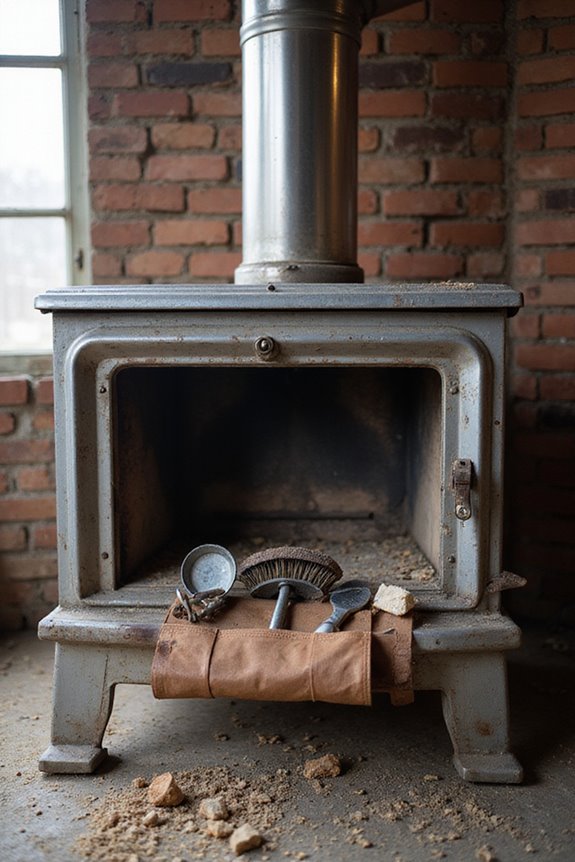
To keep our stoves and chimneys running smoothly, regular maintenance isn’t just a good idea—it’s essential. We should arrange annual inspections to catch any damage or blockages and check that everything’s in working order. During these inspections, let’s focus on the chimney lining and mortar integrity.
To tackle chamber cleaning, we can use chimney brushes and rods for effective soot removal. It’s wise to clean out creosote deposits and check ash pans regularly, too. Remember, a clean stove means efficient burning! Also, let’s not forget to inspect the chimney cap and flashing to prevent leaks and debris buildup. By keeping up with our maintenance, we’ll enjoy cozy fires without worries about safety! Additionally, maintaining a stove aligns with the requirement for high heating performance to ensure we minimize fuel use and maximize warmth.
Understanding Smoke Dispersion and Environmental Conditions
After ensuring our stoves and chimneys are well maintained, it’s time we shift our focus to understanding how smoke behaves outside. The air quality can change dramatically depending on atmospheric stability. Stable conditions trap smoke low, creating those pesky inversion layers. That’s not great for us! Wind effects can either help disperse smoke or make it roam uninvited, especially with nearby hills affecting its path. Seasonal variations and humidity impact this too; think winter inversions and humid days causing foggy conditions. To manage this, we should be mindful of topographic influences and how they might slow down smoke transport. Notably, temperature ratings can also play a crucial role in how smoke disperses, influencing air quality around our homes. Let’s stay aware of the weather, and we can keep our air cleaner for everyone!
Communicating With Neighbors and Authorities
While we may not always see eye to eye with our neighbors, open communication is key to resolving smoke-related issues. Starting with an honest and calm conversation can make a world of difference. Let’s share specific examples of how the smoke impacts our air quality and health. Proposing compromises, like adjusting stove operation times, often leads to mutually beneficial solutions.
Documenting smoke disturbances—dates, times, and photos—will strengthen our neighborly dialogue. If issues persist, we can engage local authorities by identifying the right government bodies for air quality complaints. Maintaining this connection fosters community understanding and can prevent tensions from escalating. By keeping the door open for ongoing discussions, we can collaboratively tackle any future issues! Incorporating resources such as emergency radios with NOAA weather alerts can also improve our preparedness for potential smoke-related emergencies.
Adhering to Regulatory Compliance and Best Practices
By following these *regulatory frameworks*, we not only keep our neighborhood happy but also help protect our air quality. Let’s make sure our fires burn clean and bright! Additionally, utilizing stoves with safety features can further enhance our efforts in maintaining clean air standards and reducing emissions.
Implementing Emission Reduction Techniques
When it comes to managing smoke from our stoves, implementing emission reduction techniques can make a big difference. We can start by selecting the right materials for our stoves, which can boost combustion efficiency and lower emissions. It’s also vital to optimize airflow with those nifty automatic control systems.
Regular maintenance is critical too. Sweeping our chimneys helps with effective flue management and guarantees our stoves run smoothly. We should also remember to use dry fuel, as moist wood creates more smoke!
Plus, lighting our fires from the top enhances combustion, reducing particle emissions. By taking these steps together, we can truly create cleaner air for ourselves and our communities!
Utilizing Technology for Smoke Management
How can we harness technology to make smoke management more effective and less of a hassle? By utilizing automated control and combustion optimization, we can truly transform how our stoves operate. Advanced systems, like real-time combustion intelligence, keep an eye on our fire conditions, adjusting the airflow to minimize smoke emissions on the fly. It’s like having a personal assistant for your stove, ensuring every log burns efficiently. Plus, stoves like the Skye E700 offer incredible efficiency with very low emissions, meeting even the toughest regulations. So, let’s embrace these technologies. They not only reduce our smoke problems but also help us feel good about being environmentally friendly. Together, we can create a cleaner, more enjoyable home atmosphere.
Frequently Asked Questions
What Are the Health Effects of Smoke Inhalation From Stoves?
When we breathe in smoke, we’re inviting health risks that can lead to serious respiratory problems. We’ve got to remember our loved ones—especially kids and seniors—are most vulnerable. Let’s prioritize clean air together.
How Can I Tell if My Stove Is Emitting Too Much Smoke?
We can tell if our stove’s emitting too much smoke by watching for excessive, thick fumes and odors. Monitoring emissions helps us guarantee compliance with regulations; smoke detection is vital for our indoor air quality and health.
Are There Specific Times of Year When Smoke Is More Problematic?
As we cozy up during winter months, we can’t ignore that smoke often lingers more heavily in the air. Our air quality can suffer, making those chilly evenings feel less inviting than we’d hope.
What Should I Do if My Neighbor’s Smoke Bothers Me?
If our neighbor’s smoke bothers us, let’s document our concerns and discuss them directly with them. We can also explore local smoke regulations and file neighbor complaints if the situation doesn’t improve. Together, we’ll find relief.
How Can Children and Pets Be Protected From Smoke Exposure?
We can shield our little ones and pets like a cozy blanket, ensuring smoke safety by creating physical barriers, improving air quality, and teaching them about the dangers, so they breathe easy and safe.