As an Amazon Associate, we earn from qualifying purchases. Some links on this site are affiliate links at no extra cost to you. Our recommendations are based on thorough research and editorial judgment.

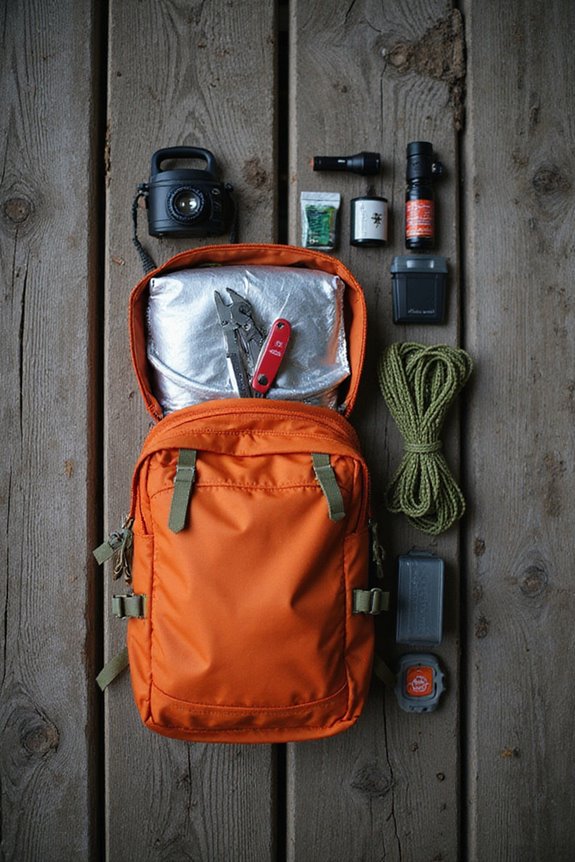
What Is A Hiker Emergency Pouch?

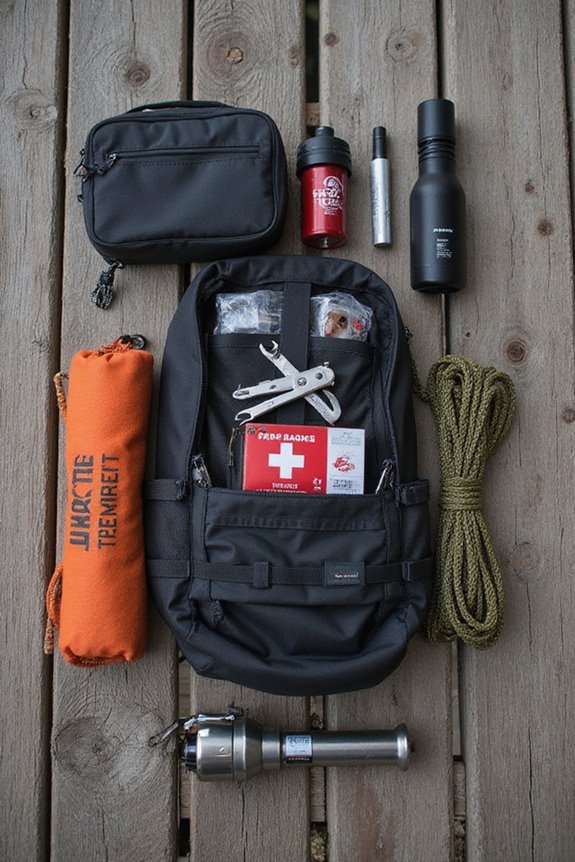
A hiker emergency pouch is a compact, lifesaving kit we should all carry while hitting the trails. It’s packed with first aid supplies like band-aids and pain relievers, plus tools for fire-starting and navigation, like flint sparkers and whistles. When we face unexpected situations, this pouch helps us stay self-reliant. Regularly checking and updating its contents guarantees we’re ready for anything. Want tips on customizing your pouch for specific hikes? Let’s explore that together.
Key Takeaways
- A hiker emergency pouch is a compact kit designed for safety and emergency preparedness during outdoor adventures.
- It contains essential tools and supplies, including first aid items, navigation aids, and fire safety equipment.
- The pouch promotes self-reliance by enabling hikers to handle unexpected injuries and situations effectively.
- Items are organized for easy access, allowing for quick response in emergencies on the trail.
- Regular maintenance of the pouch’s contents is crucial to ensure readiness for various hiking conditions and injuries.
Definition and Purpose of a Hiker Emergency Pouch
When we hit the trails, having a hiker emergency pouch can be a real lifesaver. Think of it as our trusty sidekick for hiker safety and emergency preparedness. This compact pouch is packed with essential tools and supplies designed for unexpected situations. Whether we face an injury, bad weather, or find ourselves lost, it helps us tackle these challenges head-on.
Instead of panicking, we’ve got a plan! Our emergency pouch aids in treating minor injuries and keeping us safe. It doesn’t just keep us calm; it promotes self-reliance too. It’s lightweight and portable, so we’ve got no excuse not to take it along. Including items like a first aid kit ensures we are well-prepared for any medical emergencies. With all that support, every trek feels a little bit safer and far more adventurous!
Essential Contents in a Hiker Emergency Pouch

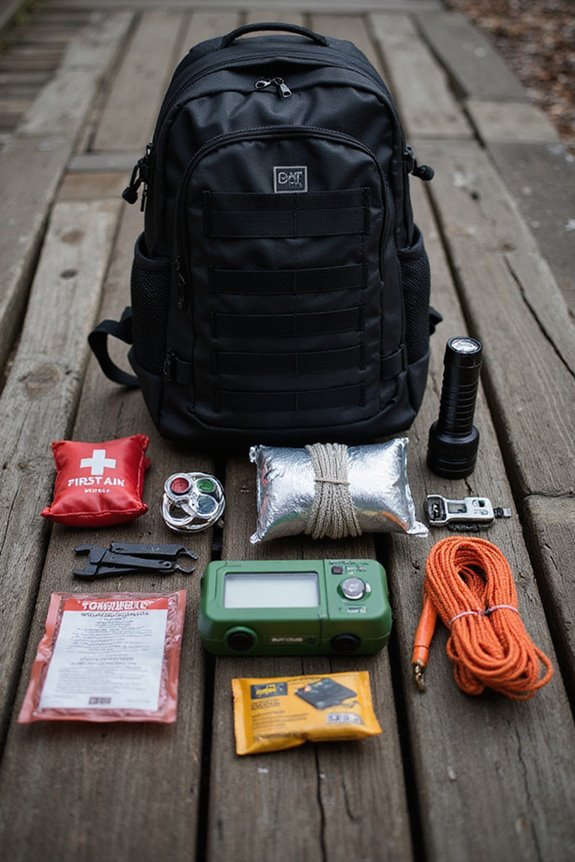
Packing a hiker emergency pouch means knowing exactly what to bring along. First, we need a solid first aid kit. This should include adhesive bandages in various sizes, sterile gauze, and maybe even some pain relievers like ibuprofen. You never know when you’ll need to patch up a boo-boo!
Next, let’s not forget fire safety. Waterproof matches, flint sparkers, and some fire starters can be real lifesavers. They guarantee we’ll stay warm or cook food if things go south.
Lastly, think about navigation tools and signaling devices, like a whistle or a compass. Having these essentials gives us peace of mind, knowing we’re prepared for unexpected adventures on the trail. In addition, consider including a comprehensive first aid kit to handle a variety of injuries during your hike. So, let’s get packing and hit those trails!
Additional Survival Tools Commonly Included
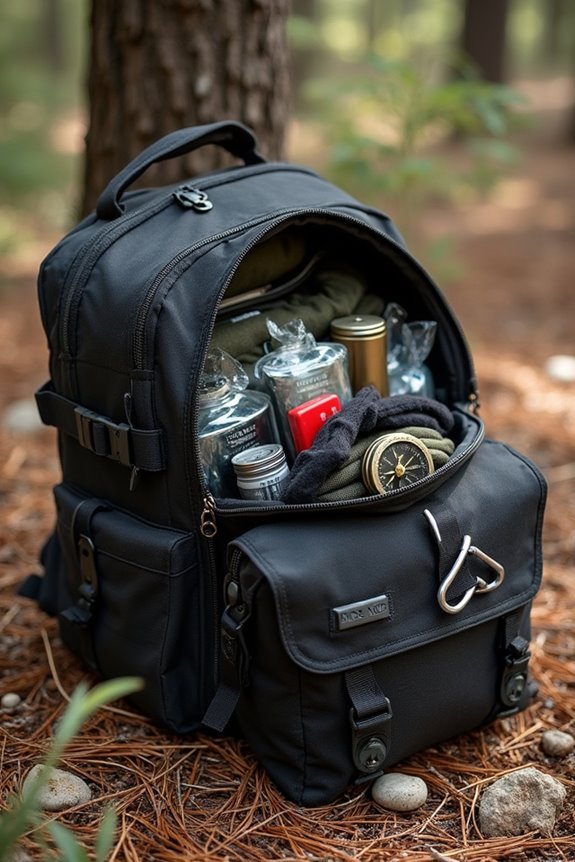
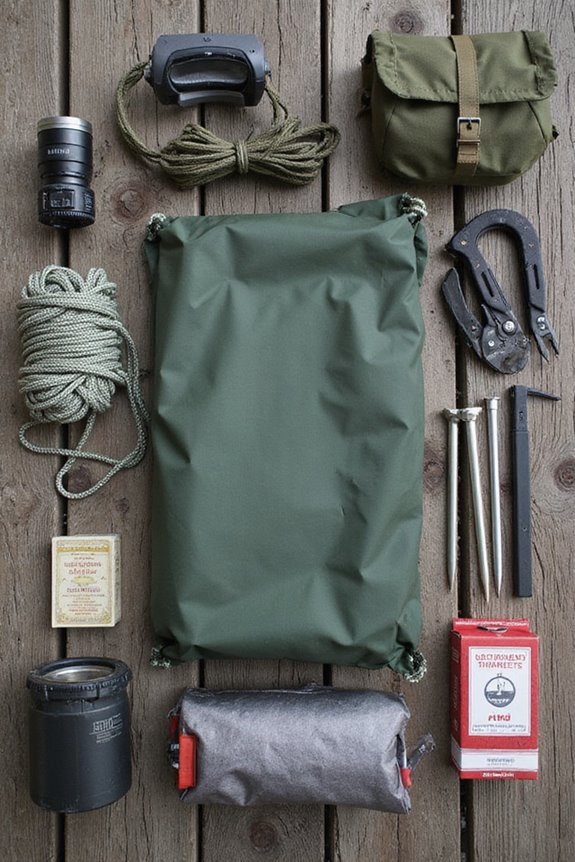
Survival tools can greatly enhance our readiness for unexpected situations in the great outdoors. Among the essentials, we should include compact tarps for emergency shelter—they’re lightweight and easily packable. For warmth, thermal blankets are also a must; they trap heat while taking up minimal space.
Fire-starting aids like reflective tinder cords and stormproof matches can turn an ordinary campfire into a reliable heat source, even in bad weather. Let’s not forget signaling tools like slim whistles and mini compasses to help us navigate and get noticed if we’re lost. Finally, a little duct tape goes a long way for quick repairs. With these lightweight tools by our side, we’re ready for whatever nature throws our way! Moreover, knowing about a tent’s waterproof ratings can greatly influence your ability to stay dry during unexpected rain.
Kit Organization and Customization
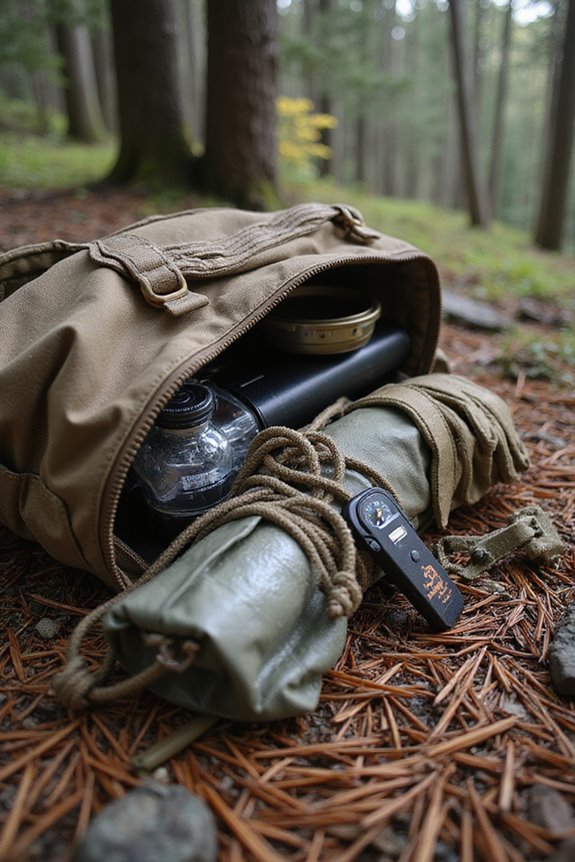
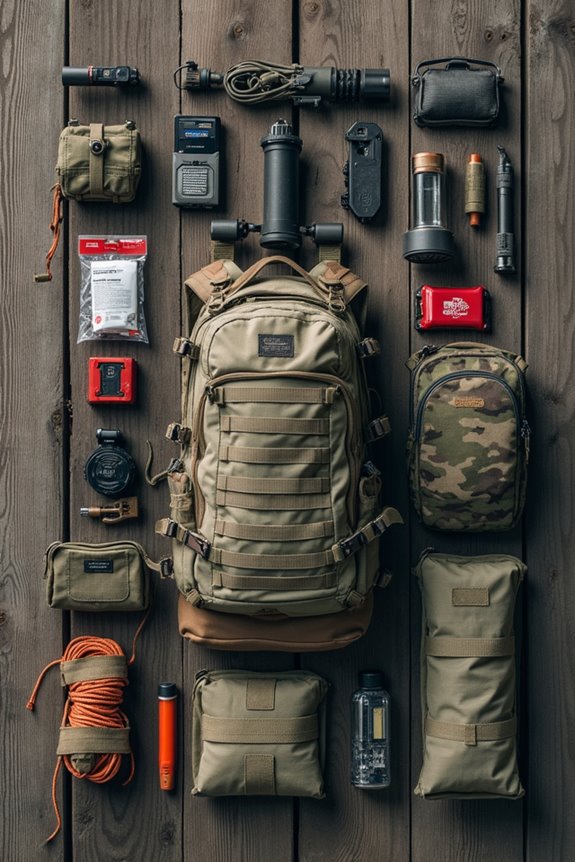
A well-organized kit can make all the difference when we’re out on the trails. To maximize kit efficiency, let’s use separate, labeled compartments for quick access to bandages, medications, and tools. We should stash frequently used items near the top, allowing us to grab what we need without wasting precious time. And hey, don’t forget waterproof bags to keep our personalized supplies safe from moisture.
Tailoring our kits is key. Adjust contents based on the number of hikers or specific terrain risks. Regularly check and replenish what’s inside. This way, we’re ready for anything the trail throws our way. Remember, a little organization can keep our adventures safe and fun! Additionally, incorporating survival tools designed for readiness can enhance our preparedness for unexpected situations. Let’s hit those trails, confident and prepared!
Common Injuries and Situations Addressed
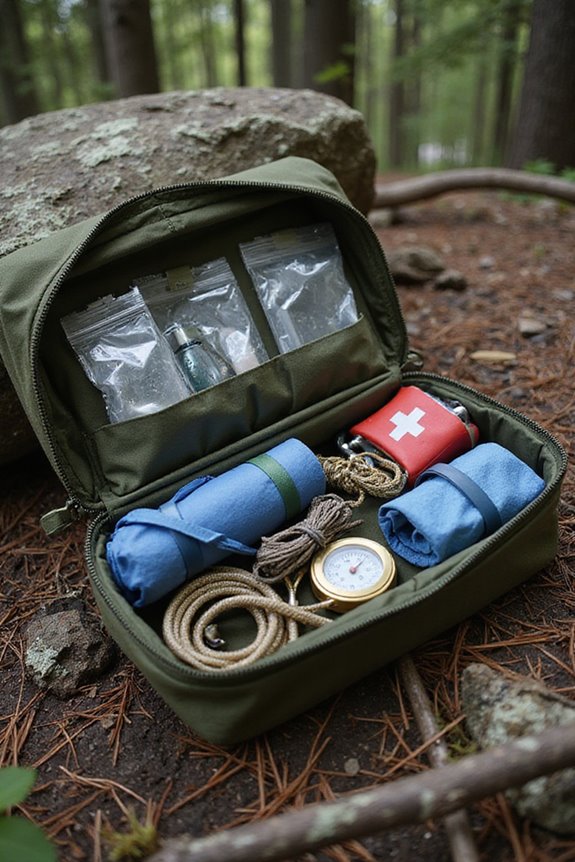
While hiking can be one of the most rewarding activities, it’s important to be prepared for common injuries and situations that might pop up along the way. Blisters are the most frequent nuisance, often arising from friction. For blister care, always pack moleskin, duct tape, and adhesive bandages—these can be life-savers!
Sprains, often involving ankles or knees, can ruin our day. For sprain management, we should carry elastic bandages and splints. If we hear a pop, stabilizing the area and resting is essential. Additionally, having a first aid kit handy can provide comprehensive supplies for various injuries and emergencies.
Recommended Best Practices for Use and Preparation
Being prepared for unexpected situations is key when we hit the trails. First, let’s keep our emergency pouch easily accessible, but secure. We should regularly check and refresh the items, making sure everything works. A solid hydration strategy is essential; always carry more water than you think you need, plus purification methods like a LifeStraw. For safety communication, packing an emergency whistle can help us signal for help if needed. Let’s practice using critical items like fire starters and first aid tools before we go, ensuring we understand how they work. Additionally, consider including a water purification system to guarantee safe drinking water during your adventures. Finally, adjusting our pouch contents based on trail conditions will help keep us safe and ready for whatever adventures come our way. Happy hiking!
Importance of Self-Reliance in Outdoor Adventures
Self-reliance is essential when we venture into the great outdoors. It’s not just about finding your way; it’s about building self-reliance skills that will stay with us for life. When we face challenges outside our comfort zones, we grow. Each hike teaches us to trust ourselves, especially when things don’t go as planned. With a well-prepared hiker emergency pouch, we can tackle unexpected situations head-on.
Think of it as our safety net—a collection of gear that helps us stay on track. Plus, outdoor preparedness boosts our confidence and resilience. We learn to communicate and work together, essential for group adventures. In the end, embracing self-reliance turns nature from an intimidating wilderness into our personal playground. Ready for the thrill? Let’s go!
Tailoring Your Hiker Emergency Pouch to Specific Needs
When we hit the trails, it’s essential to customize our hiker emergency pouch to fit our unique needs. Each environment we explore requires specific gear—think thermal blankets for cold climates or extra water bottles for dry deserts. Depending on our group size and skill assessments, we might pack heavier or lighter. Beginners might want a couple of user-friendly tools, while experienced hikers can carry advanced gear.
Let’s not forget our health—personal medications and first-aid items, like blister care or pain relief, are vital. Adding waterproof pouches helps us find what we need quickly, even in a pinch. So, let’s tailor our kits wisely! After all, staying prepared means more adventure and less worry on the trail.
Keeping Your Emergency Pouch Updated and Ready
To guarantee our hiking adventures are safe and enjoyable, keeping our emergency pouch updated is essential. Regular inventory management means checking our supplies before each hike. Let’s replace expired medications and ascertain batteries are fresh. Remember, moisture can wreak havoc, so we should verify that our waterproof packaging is intact.
Seasonal adjustments also matter. We might need sunscreen in the summer and thermal blankets in winter. Let’s not forget to restock items after heavy use, like blister care supplies.
Frequently Asked Questions
How Much Does a Typical Hiker Emergency Pouch Weigh?
A typical hiker emergency pouch weighs between 1.5 ounces and 2.2 pounds. For our safety, we should choose lightweight emergency supplies, ensuring we’re well-prepared without feeling burdened on our adventure together.
Can I Make My Own Hiker Emergency Pouch?
Absolutely, we can craft our own hiker emergency pouch. By selectively choosing DIY hiker essentials and customizing emergency kit components, we guarantee our kit’s uniquely tailored for our adventures, making us feel prepared and confident on each journey.
What Is the Ideal Size for a Hiker Emergency Pouch?
The ideal pouch dimensions for our emergency preparedness are around 6.5 x 5.5 x 3 inches. This size balances portability and capacity, ensuring we’ve got everything essential without unnecessary weight during our hikes.
Are Hiker Emergency Pouches Water-Resistant?
Yes, many hiker emergency pouches are water-resistant, often made with waterproof materials that protect our essential emergency supplies. Knowing this can bring us peace of mind during our adventures, right? Let’s explore more together!
How Do I Carry My Emergency Pouch While Hiking?
We can carry our emergency pouch in various locations like our backpack’s main compartment for protection or attach it externally for quick access. Finding the best carrying methods guarantees we’re prepared and confident during our hike.