As an Amazon Associate, we earn from qualifying purchases. Some links on this site are affiliate links at no extra cost to you. Our recommendations are based on thorough research and editorial judgment.

What Is A Bushcraft Knife Used For?

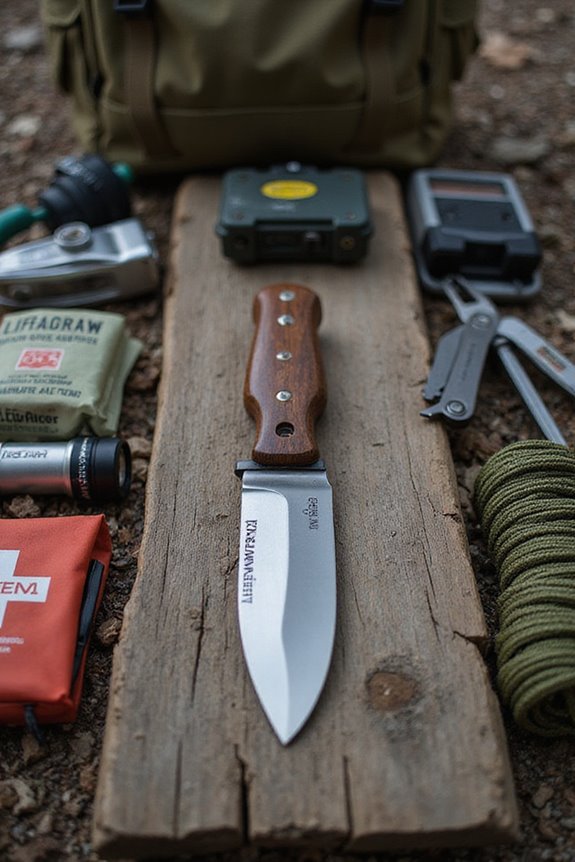
A bushcraft knife is our go-to tool for outdoor adventures. It’s perfect for food prep, letting us chop and clean our catch with ease. When it comes to shelter building, this knife helps us carve notches and shape branches for strong structures. We can even start fires with it, using those nifty sparks from a ferro rod! Whether we’re whittling wood or making a snack, this knife is key. There’s so much more to explore about these versatile tools!
Key Takeaways
- Bushcraft knives are primarily used for food preparation, including chopping, dicing, and skinning for outdoor meals.
- They assist in shelter building by shaping materials and carving precise notches for structural integrity.
- These knives are essential for fire-starting techniques, providing tools for striking sparks and processing tinder.
- Bushcraft knives excel in making tools and crafts, enhancing outdoor skills and self-sufficiency.
- They are versatile for various outdoor tasks, combining precision and functionality for wilderness survival.
Understanding Bushcraft Knives
When we think about bushcraft knives, it’s easy to see why they’re considered a must-have tool for outdoor enthusiasts. The history of these knives runs deep, rooted in survival and self-sufficiency. They’re perfectly designed for making shelters, crafting tools, or even preparing our meals outside.
Taking care of our bushcraft knives is essential. Regular cleaning and sharpening maintain their effectiveness, ensuring they can handle all sorts of tasks, from cutting kindling to slicing fish. We should aim to store them safely, keeping the blade dry and rust-free. Additionally, understanding the right blade material for our knives can greatly enhance their performance and longevity.
Whether we’re whittling a feather stick or prepping dinner under the stars, understanding these knives and caring for them allows us to connect with nature a little more intimately.
Key Features of Bushcraft Knives

Bushcraft knives are more than just blades; they’re versatile tools that can make or break our outdoor experiences. When we choose a bushcraft knife, we often consider blade material and handle materials. Carbon steel offers toughness, but we must stay on top of blade maintenance to keep rust at bay. Stainless steel, meanwhile, shines in wet environments, providing better corrosion resistance.
We also love how full tang construction in handles—made from materials like Micarta or G-10—offers strength and comfort. Good grip reduces hand fatigue and enhances control during those detailed tasks, whether carving or chopping. Additionally, having a knife with self-locking mechanisms can greatly improve safety and usability during outdoor activities. So, let’s prioritize our choices wisely, focusing on maintenance and ergonomics, to guarantee our knives become trusted companions on every adventure.
Blade Design Types
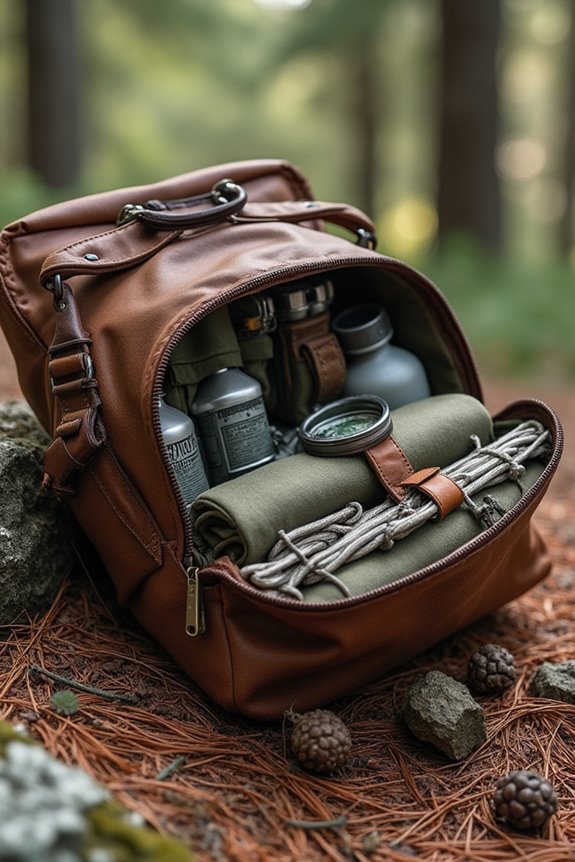
Choosing the right blade design for a bushcraft knife isn’t just about personal preference; it’s all about understanding the tasks we’ll encounter in the great outdoors. When we look at blade shapes, we see several grind types that cater to different needs. For instance, the Scandi grind excels in wood carving with its sharp edge, while the full flat grind strikes a nice balance between sharpness and durability.
If we need to chop, kukri blades are fantastic for heavy-duty tasks. On the other hand, a clip point offers precision for piercing. Each blade design serves a specific purpose, so picking the right one can make our outdoor adventures smoother and more enjoyable. Let’s choose wisely! Additionally, having a reliable fire starter, such as a ferro rod can greatly enhance our outdoor experience by ensuring we can make fire easily when needed.
Common Materials Used in Bushcraft Knives
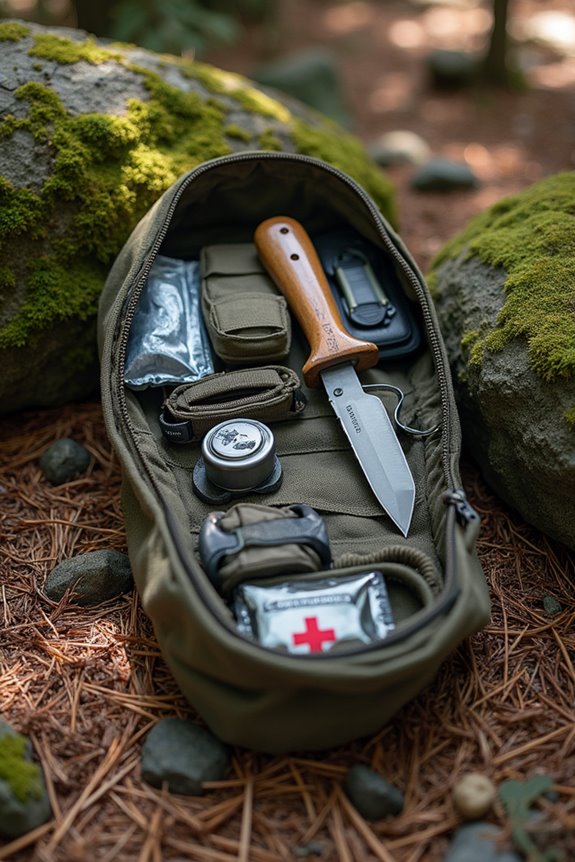
Selecting the right materials for bushcraft knives is like picking the perfect teammate for an outdoor adventure—each one plays an essential role in ensuring success. We often rely on two main types of steel: carbon steel and stainless steel. Carbon steel, like 1095, boasts high hardness and sharpness but needs regular maintenance to fend off rust. On the other hand, stainless steel—like AUS-8—has a higher chromium content, making it resistant to stains and easy to care for.
Each option has its strengths and weaknesses, depending on our outdoor conditions. Ultimately, finding the right balance between edge retention, toughness, and maintenance is key. It’s all about choosing the steel that best suits our bushcraft adventures! Additionally, considering options with a longer shelf life can enhance your preparedness in outdoor situations.
Construction and Durability
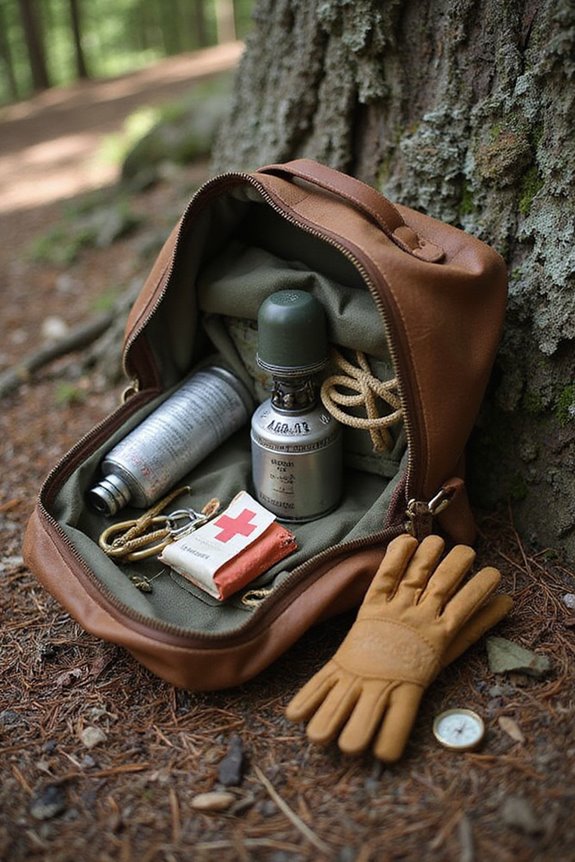
When we think about the construction and durability of our bushcraft knives, it’s more than just sharp edges and pretty handles. A full-tang design, for instance, gives us the strength and balance to tackle tough tasks. We love blades with a drop point or Scandi grind for their versatility and precision.
High-carbon steel is often our choice for durability, but it does need regular blade maintenance to keep rust at bay. Let’s not forget about handle care; materials like wood or synthetic options are designed with ergonomics in mind. They provide a stable grip during use. Ultimately, taking care of our knives—cleaning, sharpening, and storing them well—can make all the difference in their performance and longevity. Furthermore, similar to filter replacement frequency, maintaining your bushcraft knife’s condition is key to ensuring it serves you well over time.
Ideal Size and Weight Specifications
Finding the right size and weight for a bushcraft knife is essential for getting the most out of our outdoor adventures. Ideally, we should aim for a blade length of 3.5 to 5 inches, which strikes a fantastic balance for various tasks. We want good weight distribution too; a knife weighing between 120 and 190 grams feels right in our hands, making it easier to work for extended periods. A four-inch blade is even practical in places with legal restrictions. Plus, a well-balanced knife improves our precision and control. Remember, while we might love a heavier knife for tougher jobs, it can also wear us out faster. Let’s choose wisely and enjoy our adventures! Additionally, having a survival kit can complement our bushcraft activities by ensuring we are prepared for unexpected challenges.
Importance of Ergonomics
Understanding the significance of ergonomics in our bushcraft knife not only enhances our comfort but also boosts our performance. When we hold a knife designed with ergonomic principles, we notice how the handle contours to our hand’s natural curves. This means less discomfort and reduced hand fatigue, especially during longer tasks.
The choice of handle materials like hardwood, micarta, and rubber also plays an essential role. Textured surfaces guarantee we maintain our grip even when conditions get a little slippery. Plus, balanced weight distribution at the handle allows for smoother movements, making every slice feel effortless.
Cutting and Carving Tasks
Cutting and carving tasks are essential skills in the bushcraft world, and they really help us connect with nature. Our bushcraft knives are perfect carving tools, enabling us to shape fresh, green wood into everything from walking sticks to camping gear. When we use shaping techniques like angled cuts, we’ll find our joints fit snugly, and we can avoid splitting the wood.
To start, maintain a sharp edge—this keeps our work efficient and helps avoid fatigue. We can also create kindling by skillfully splitting branches; think of it as giving life to our fire! With practice, these cutting and carving techniques not only enhance our crafts but deepen our relationship with the wild around us. Let’s get to work!
Whittling Techniques
Whittling is more than just a hobby; it can be a meditative practice that connects us to our environment and releases our creativity. To get started, we need a good whittling knife with a long, straight blade, and don’t forget about knife maintenance—keeping it sharp is key!
Let’s explore some whittling techniques. First, always cut with the grain; it makes the job a lot smoother. For basic cuts, slide the knife edge through the wood, applying gentle pressure. If you want to scoop, angle your knife upwards while pushing through. Remember to remove thin layers to avoid tearing. Also, keeping our hands clear of the blade is essential for safety. So, grab that knife and let’s create!
Food Preparation Skills
After honing our whittling skills, let’s shift our focus to food preparation skills, another area where our trusty bushcraft knife really shines. With this tool, we can tackle food slicing like a pro, transforming fresh ingredients into meal-ready masterpieces.
First, let’s consider ingredient trimming. With a solid blade, we can easily cut away fat from meat or peel veggies without fuss. We’ll also want to practice safety, keeping our hands clear while expertly filleting or skinning fish—no one wants an accidental poke!
Imagine the joy of sharing a meal we’ve prepped together. Our knife’s versatility makes it simple, whether it’s chopping, dicing, or skewering for an open-fire feast. It’s all about that connection with nature and our food!
Shelter Building Applications
Building a shelter is one of the most essential skills we can master in the great outdoors. With our trusty bushcraft knife, we can begin our journey by selecting strong, dead wood free from rot. Yep, don’t touch that green wood; it’s a pain! As we shape branches and carve precise notches, we’re already thinking about our shelter design. We need that frame sturdy, right?
Next up, we’ll layer natural materials, like leaves and moss, as insulation techniques to keep us warm and dry. Trust us, a snug shelter feels like a hug from nature! Finally, let’s fluff up bedding with those soft pine boughs. Our bushcraft knife is our best buddy here, helping us build a cozy retreat as we embrace the wild.
Fire-Starting Methods
When it comes to starting a fire in the wild, having three essential methods up our sleeve can really boost our chances of success. Let’s explore some fire starting techniques using our trusty bushcraft knife! We can use friction methods like the hand drill or bow drill. First, we should carve a pointed spindle and a fireboard with a V-notch.
For a quicker option, we might strike a ferrocerium rod with the knife’s spine, producing hot sparks that ignite tinder. Finally, let’s not forget about flint and steel, where we’d strike the knife blade against flint to create those crucial sparks. With practice, these methods will bring warmth and light, even in the wildest of places!
Bushcraft Knives vs. Survival Knives
While both bushcraft knives and survival knives serve essential roles in the great outdoors, they cater to different needs and situations. Bushcraft knives shine in precision tasks, like carving and shelter building, featuring shorter, thinner blades for fine control. In contrast, survival knives boast longer and thicker blades designed for heavy-duty chopping and multitasking.
When using either, it’s crucial to adopt best practices like regular knife maintenance—keeping those edges sharp can save the day!
Bushcraft blades are typically made from high carbon steels, best for resharpening, while survival knives might lean towards more durable stainless options. So whether you’re making kindling or prepping for the unexpected, knowing your knife’s strengths can make our outdoor adventures a lot smoother, don’t you think?
The Versatility of Bushcraft Knives
Bushcraft knives are more than just sharp blades; they’re incredibly versatile tools that can tackle a wide range of outdoor tasks. We can use them for creative crafting, whether we’re shaping wood into tools or trimming branches for our shelter. With their Scandi grind blades, they provide precision for delicate tasks like carving feather sticks or making notches for pot hangers.
They’re also essential for practical applications like food preparation, where they handle everything from filleting fish to slicing wild fruit. Plus, they’re a must-have for fire starting, allowing us to create sparks or shavings easily. In every outdoor adventure, their multiple uses offer us reliability and efficiency, making them indispensable companions in the wild.
Frequently Asked Questions
Can I Use a Bushcraft Knife for Self-Defense?
While we can consider a bushcraft knife in self-defense scenarios, its limitations in effectiveness and size mean we should approach this option with caution, as it’s primarily meant for utility in the wild.
What Maintenance Is Required for Bushcraft Knives?
We need to prioritize regular sharpening techniques and proper care tips for our bushcraft knives. Cleaning, drying, and oiling are essential to keep them in prime condition, ensuring longevity and peak performance every time we use them.
Are Bushcraft Knives Suitable for Beginners?
Absolutely, bushcraft knives are great for beginners! They help us develop essential skills while ensuring knife safety. With their ergonomic design and versatile features, we can confidently learn and explore together without feeling overwhelmed.
How Do I Choose the Right Bushcraft Knife?
To choose the right bushcraft knife, we should consider blade materials for durability and sharpenability, along with handle ergonomics for comfort. A well-balanced knife makes our outdoor adventures safer and more enjoyable together.
Can I Use a Bushcraft Knife for Fishing Tasks?
They say, “A tool’s only as good as its user.” We can absolutely use a bushcraft knife for fishing tasks, as its versatility makes it perfect for various fishing techniques, ensuring we’re always ready on our adventures.