As an Amazon Associate, we earn from qualifying purchases. Some links on this site are affiliate links at no extra cost to you. Our recommendations are based on thorough research and editorial judgment.

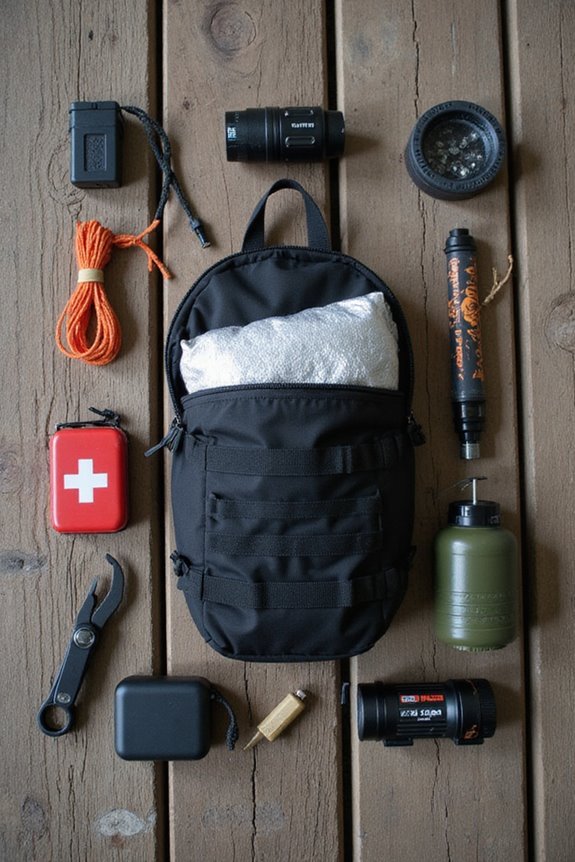
What Is A Budget Emergency Kit?

A budget emergency kit is a collection of essential supplies we put together to keep ourselves and our families safe during unexpected situations, all while being wallet-friendly. We need basics like water, non-perishable food, flashlights, and first aid supplies. The idea is to gather these items gradually, possibly sharing with neighbors to cut costs. Maintaining our kit is vital, so it stays effective and ready for any emergency. Want to know how to customize your kit for specific needs?
Key Takeaways
- A budget emergency kit is a collection of essential supplies for emergency preparedness without incurring high costs.
- It typically includes items like water, non-perishable food, first aid supplies, and basic lighting tools.
- Assembling a kit can involve using existing household items and pooling resources with neighbors to reduce expenses.
- Regular maintenance, including inspections every six months, ensures that supplies remain effective and fresh.
- While cost-effective, budget kits may have limitations in quality and customization for specific family needs.
Definition and Purpose of a Budget Emergency Kit
When we think about emergencies, imagine the unexpected. It might be a sudden storm or a power outage. That’s where a budget emergency kit comes in. Think of it as a collection of essential supplies, designed for emergency readiness without breaking the bank. This kit helps us sustain ourselves and our families without financial strain. Regular updates to the kit ensure that the supplies remain effective, reflecting the importance of emergency kits in enhancing safety and preparedness.
Core Components of a Budget Emergency Kit
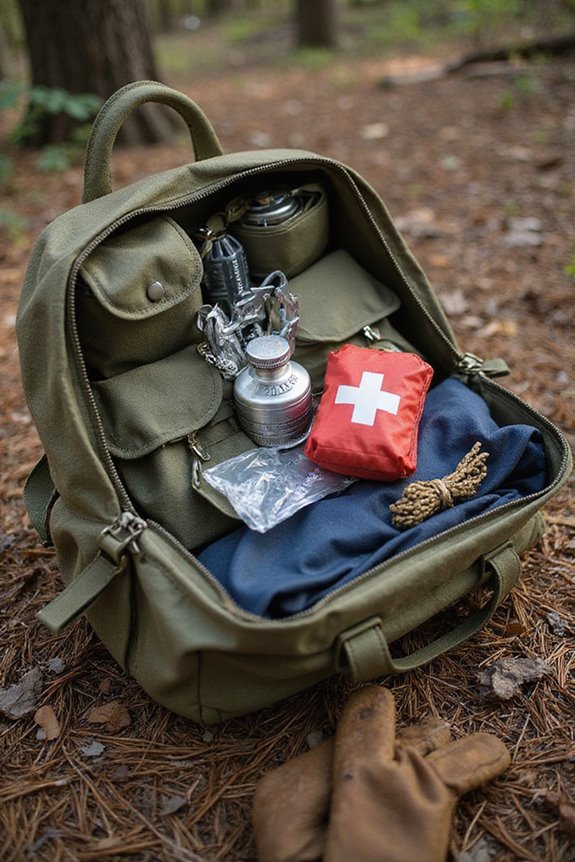
No one wants to imagine facing an emergency, yet being prepared can make all the difference. At the heart of a budget emergency kit are its core components: essential supplies that keep us safe and comfortable. We should start with at least one gallon of water per person per day—it’s essential for both drinking and sanitation. Let’s pack non-perishable foods too, like canned goods and dry staples, and don’t forget a manual can opener!
We must also include lighting tools like battery-powered flashlights or radios for updates. Medical supplies, like a first aid kit and necessary medications, are critical. Additionally, essential supplies such as hygiene items should be included to ensure overall well-being. Finally, packing comfort items, like books or games, can help ease stress during tough times. Staying prepared is key!
Cost-Effective Strategies for Assembling a Budget Kit
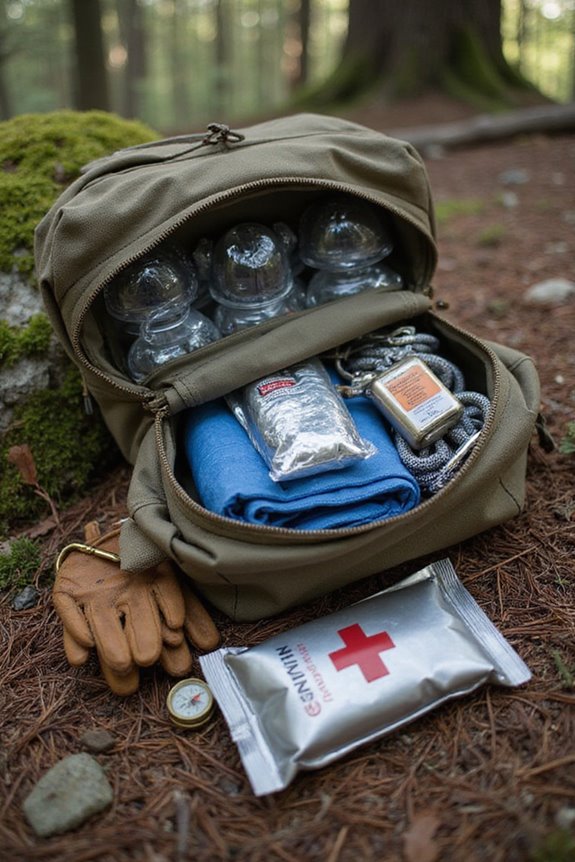
As we think about assembling a budget emergency kit, it’s essential to start with the essentials while keeping an eye on costs. First, let’s focus on what we truly need: water, non-perishable food, flashlights, and first aid supplies. We can engage in collaborative pooling by sharing resources with neighbors. If they have extra supplies, let’s borrow what we can instead of buying everything ourselves.
Don’t forget to look around our homes for usable items. Old clothing can serve as blankets, and those extra canned goods become lifesavers. By gradually collecting our supplies, we reduce big expenses at once. Additionally, considering the specific context of our living situation can help us determine which supplies are most necessary for our unique needs. Let’s remember: planning and resource sharing is key to keeping our budget intact and ensuring our safety when emergencies arise.
Additional Considerations Specific to Budget Emergency Kits
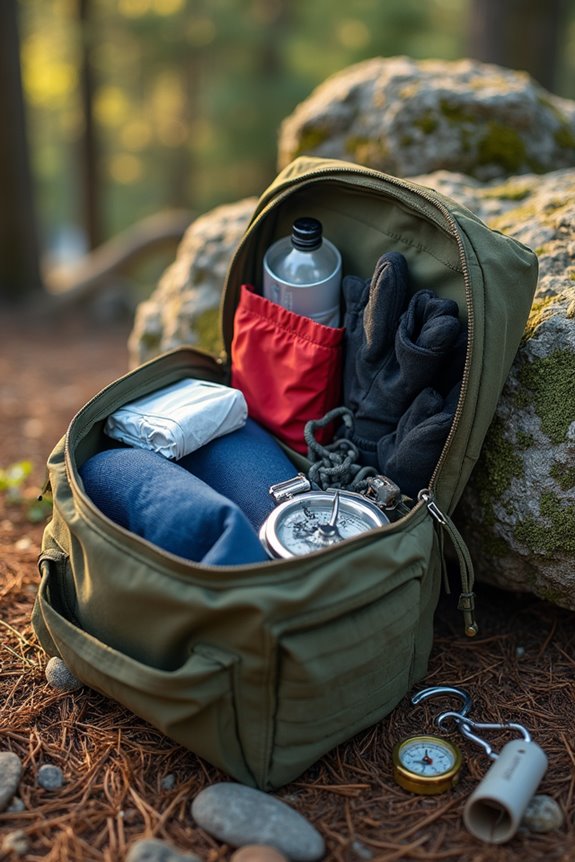
While we’re putting together our budget emergency kits, it’s vital to contemplate more than just the basics. We should think about our family’s unique needs. This means including necessary medications, age-specific items for kids, and any mobility aids for those who need them. Let’s not overlook emotional support. Packing comfort items like favorite toys or books can make a big difference during stressful times.
Hydration is critical, so storing enough water for each family member is a must—plus, don’t forget our furry friends! Finally, safeguarding important documents in waterproof containers guarantees peace of mind. Planning for an emergency may seem overwhelming, but with these thoughtful additions, we’re creating a kit that truly supports our entire family. Additionally, consider including comprehensive first aid supplies to address minor injuries effectively.
Essential Kit Maintenance and Storage Tips
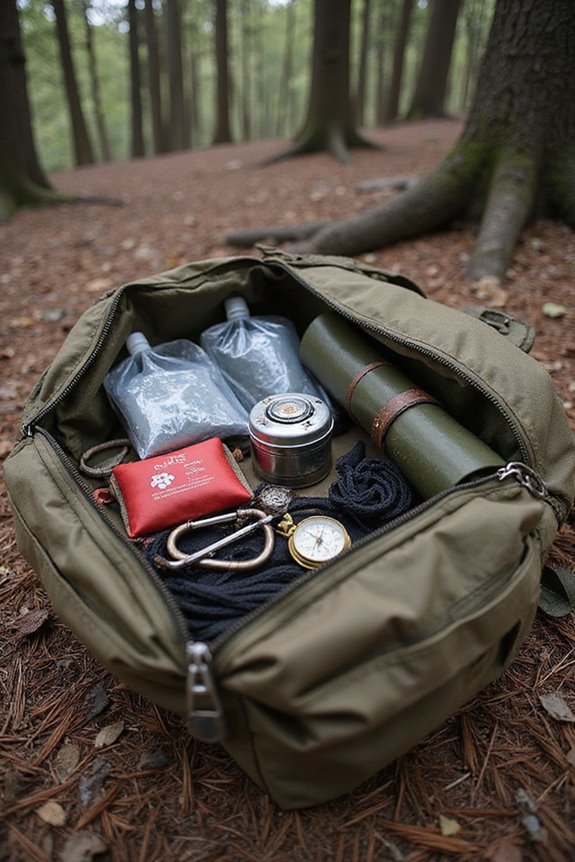
Maintaining and storing our budget emergency kits properly can make a world of difference when the time comes to use them. We should regularly perform kit inspections every six months to check for expired items and guarantee supplies are available. A cool, dry location is ideal for storage, so let’s keep our kits out of direct sunlight. Airtight containers will help keep everything fresh—think of it as a mini-vacuum seal for our supplies! It’s also smart to update and organize our kits according to our family’s changing needs. Additionally, having reliable emergency lighting options ensures we are prepared for any situation during outages. With some practice and planning, we can guarantee our kits are completely ready to go, giving us peace of mind for whatever life throws our way.
Benefits of Budget Emergency Kits
We’ve all felt that uneasy stir in our stomachs when disaster strikes, whether it’s a storm, earthquake, or something unexpected. Budget emergency kits offer tremendous benefits regarding Community Preparedness and personal security. They’re cost-effective, letting us use items we already have at home, which keeps expenses low. Plus, building our kits gradually helps fit preparedness into our budgets.
Having a few emergency resources readily available brings peace of mind. We can customize our kits to fit our family’s needs, making them adaptable for all kinds of situations. With organized storage, grabbing what we need becomes quick and efficient in a crisis. Ultimately, being prepared not only boosts our confidence but also strengthens our community’s resilience when challenges arise. Including essential components such as high-quality materials can further enhance the effectiveness of our emergency kits.
Limitations of Budget Emergency Kits
Even if budget emergency kits offer a practical way to prepare for disasters, they come with their own set of limitations. First, quality compromises are often necessary to keep costs down. This might mean choosing cheaper materials that won’t hold up when we need them most. Next, there are customization limitations; premade kits usually don’t cater to our specific needs, like dietary restrictions or family sizes. Plus, the time investment for assembling a DIY kit can feel overwhelming, leaving many of us opting for less customized options. We also face storage challenges—these kits can be bulky, making them hard to stash away. Finally, hygiene risks arise, especially with reusable items. Let’s be mindful of these hurdles as we prepare.
Customizing Your Budget Emergency Kit for Specific Needs
When preparing a budget emergency kit, it’s important to remember that one size doesn’t fit all. We need to customize our kits to fit our family’s unique needs. For example, if we have infants, let’s make sure to pack baby formula and diapers. Seniors might require specific medical needs, like prescription medications.
We must also consider our beloved pets; don’t forget their food and any necessary meds! Special items for mobility challenges, comforting toys for kids, and weather-specific gear are essential too. Let’s always include extra batteries, chargers, and first aid supplies tailored for us. By doing this, we’re ensuring our family supplies are ready to meet any emergency, keeping everyone safe and sound.
Frequently Asked Questions
How Often Should I Update My Budget Emergency Kit?
We should update our budget emergency kit every six months, focusing on kit maintenance. Regularly checking its contents guarantees we stay prepared and adapt to changing needs, keeping ourselves and our loved ones safe.
Where Can I Find Free Resources for Budgeting Supplies?
Did you know that 60% of families lack a reliable budget? We can find free resources for budgeting supplies, like budget templates and financial apps, through community centers, libraries, and local government websites. Let’s explore together!
Are There Any Government Grants for Emergency Preparedness?
Absolutely, there’s government funding available for emergency preparedness! Programs like FEMA’s EMPG and the EDA grants offer disaster relief to communities, helping us all bolster our resilience and better prepare for unforeseen challenges together.
What Are the Most Common Emergency Situations to Prepare For?
Did you know that about 26.2 million emergency visits each year are due to unintentional injuries? We should prepare for natural disasters, medical emergencies, and common accidents, ensuring we can respond effectively when crisis strikes.
How Can I Involve My Family in Building the Kit?
We can involve our family in building the kit by collaborating on decisions, assigning roles during kit assembly, and making it a fun activity. Together, we’ll guarantee everyone contributes and understands the importance of being prepared.