As an Amazon Associate, we earn from qualifying purchases. Some links on this site are affiliate links at no extra cost to you. Our recommendations are based on thorough research and editorial judgment.

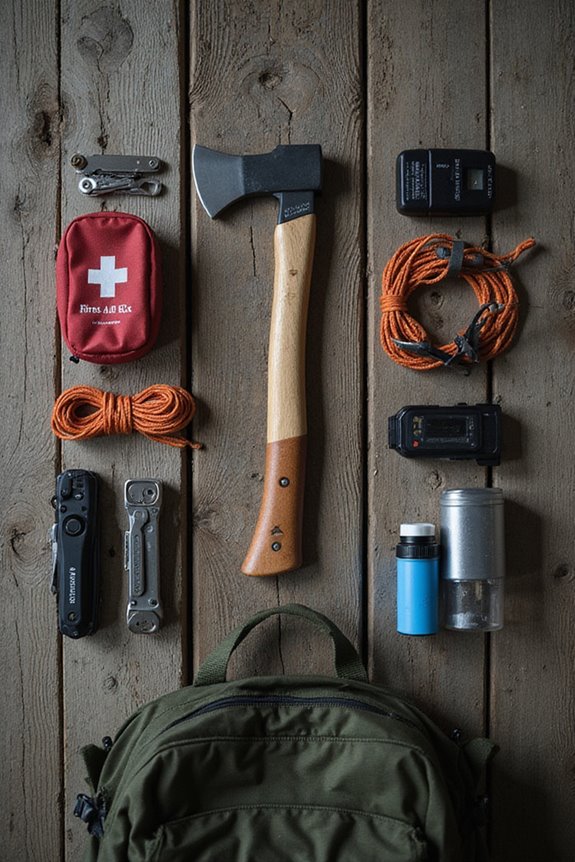
How To Pick A Compact Camp Axe?

When picking a compact camp axe, we look for a few key things. First, consider weight—around 1.5 to 3 pounds is ideal for easy handling. Choose durable materials like hickory for the handle and high-carbon steel for the head. Think about what we’ll use it for; a narrower bit is great for carving, while a wider one splits wood well. Finally, make sure it’s comfortable to hold. Stick around, and we’ll share more tips to find your perfect camp companion!
Key Takeaways
- Prioritize a lightweight axe under 19 inches for easy transport and maneuverability during camping trips.
- Choose an axe head made of high-carbon steel for optimal durability and easy sharpening.
- Look for a balanced design with a sturdy handle material like hickory or fiberglass to enhance grip and reduce fatigue.
- Opt for a compact axe with a Scandi grind blade edge for efficient cutting and splitting tasks.
- Consider a durable sheath for safe transport and protection of the blade while camping.
Understanding Axe Components

When we talk about picking the right compact camp axe, understanding the components is key. Let’s immerse ourselves in axe heads and handle materials. High-carbon steel heads, like 5160 steel, guarantee toughness and easy sharpening. You want to balance weight—typically 1.5 to 2.5 pounds—with cutting efficiency. The shape of the blade edge matters too; consider a Scandi grind for simplicity.
Now, handles vary in materials from sturdy hickory to modern composites. Look for ergonomic designs that reduce hand fatigue, especially on longer trips. If you’re fond of surprises, some even have hidden compartments! Additionally, the weight and portability of your axe will significantly impact your outdoor adventures as lighter tools are easier to carry on long treks.
Choosing the right axe head and handle materials will enhance your outdoor experience and keep you swinging with confidence. Now, let’s get chopping!
Evaluating Intended Use and Performance
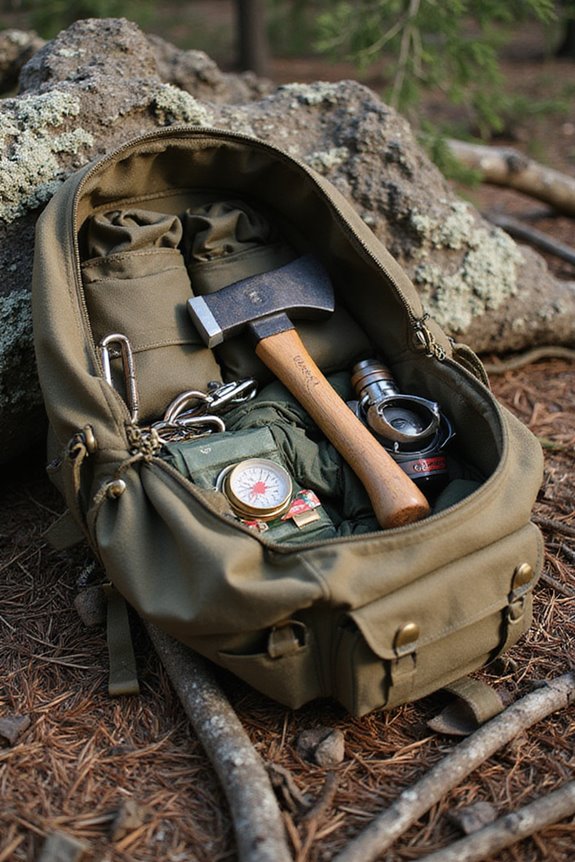
How do we choose the right axe for our camping adventures? First, we should consider our intended use evaluation. If we aim to split firewood or fell trees, heavier axe heads around 6-7 lbs offer excellent task-specific performance. For lighter duties like kindling prep, a compact hatchet under 19 inches works wonders.
Next, we must pay attention to the shape of the bit. Narrow bits are perfect for carving, while wider ones excel at splitting. Remember, the balance between head weight and handle length is key; it affects how easily we can swing the axe. Finally, ensuring our tool’s durability and ergonomic design will help reduce fatigue and enhance our overall camping experience. Let’s make sure it’s high-quality blade materials that provide longevity and performance!
Considering Size and Weight

Size and weight play an essential role in choosing the right compact camp axe for our outdoor adventures. We want something manageable yet effective, right? Finding that balance is key. Most compact axes have head weights between 1.5 and 3 pounds—perfect for chopping without tiring us out. Lighter heads help with delicate tasks, while heavier ones are better for splitting wood.
We should also think about handle materials, like hickory or fiberglass. The right choice can enhance weight distribution, making our swings more controlled. Aim for a handle between 20 and 31 inches; shorter ones offer more maneuverability, while longer handles deliver more chopping power. This way, we can efficiently tackle any task without breaking our backs—or the bank! Additionally, ensure the axe features durable sheath options to protect the blade and enhance safety during transport.
Prioritizing Ergonomics and User Comfort
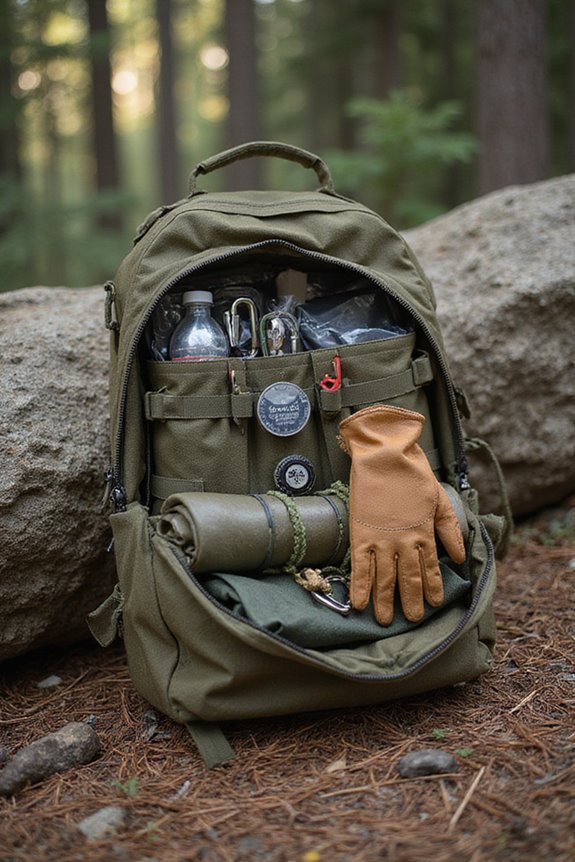
Finding a compact camp axe that’s easy to handle can make a world of difference in the great outdoors. When we prioritize ergonomics, we’re looking at handle materials and grip design that fit our hands comfortably. Ergonomic handles contour to our grip, reducing fatigue while chopping. Bi-material grips help keep our hands steady, especially when they’re slick from sweat or rain.
We should definitely check for features like molded finger grooves to prevent slipping. It’s also wise to look for lightweight designs with balanced weight distribution—they let the axe do most of the work, reducing strain. If we plan to use it for an extended period, a good grip will keep our hands happy and functional. Moreover, many outdoor tools, including axes and camping knives, are designed with these ergonomic principles to enhance usability. Let’s keep comfort at the forefront!
Assessing Durability and Maintenance
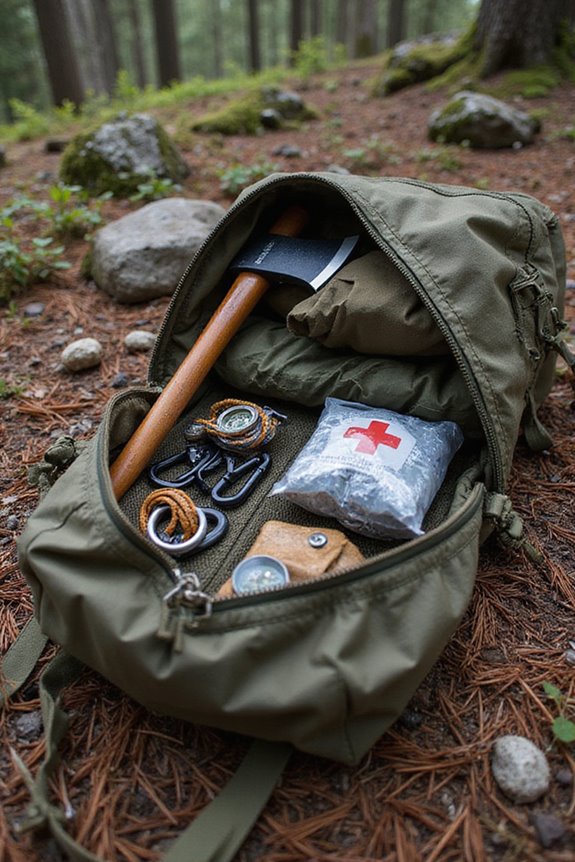
Durability and maintenance go hand in hand when choosing a compact camp axe. We want an axe that’ll last through years of adventures without falling apart. Look for one-piece forged steel heads—these babies eliminate weak joints! Double tempering keeps them tough, too.
Speaking of materials, a hickory handle is our best friend; it absorbs shock like a pro, while moisture-resistant treatments keep it safe from the elements. However, if you prefer a more modern touch, composite handles can offer weather resistance too. The ideal handle length, according to experts, is around 28 to 32 inches for better balance during use.
To keep our axe in tip-top shape, let’s sharpen it regularly and clean it after each use. A little oiling protects against rust and preserves the steel. Trust us, a bit of maintenance goes a long way!
Budgeting and Brand Recommendations
When it comes to budgeting for a compact camp axe, we’ve got options that can fit nearly every wallet. We can find solid choices under $20, like the Defender Xtreme Axe or the Edward Tools Camping Axe. For around $35, the Fiskars X7 gives us fantastic value, blending performance and price.
If we’re willing to spend a bit more, brands like Gransfors Bruk and Hults Bruk offer premium options revered for their craftsmanship. Their higher price tags come with impressive brand reputation and quality materials. Additionally, selecting durable materials is crucial for ensuring the axe withstands various outdoor conditions to serve you well in any situation.
Frequently Asked Questions
What Are the Benefits of a Compact Camp Axe Over a Standard Axe?
A compact camp axe’s benefits are its easy portability and versatile use. We find it lightweight and precise, making it perfect for various tasks while ensuring we don’t tire ourselves on our outdoor adventures.
Can I Travel With a Camp Axe on an Airplane?
We can’t bring a camp axe on airplanes in our carry-on bags due to airport security rules. It’s allowed in checked luggage, but let’s make certain it’s well-packaged and complies with camp axe regulations always.
How Do I Safely Store My Camp Axe?
When we store our camp axe, let’s cradle it in a cozy, dry space, ensuring blade protection with a sheath and cherishing our handle’s longevity through regular maintenance—keeping it ready for our next adventure together.
Are There Any Legal Restrictions on Axe Types in Certain Areas?
Yes, there’re definitely axe regulations we should keep in mind. Local laws can vary considerably, so we need to check restrictions on axe types in our area before heading out for our next adventure.
What Accessories Should I Consider for My Camp Axe?
When considering accessories for our camp axe, let’s not overlook axe sheath options for safety and portability, along with axe maintenance tools like sharpening kits to keep our blade in top shape for every adventure.